Enhanced/Dual Powered
Willem EPROM Programmer
User Guide
Main Board / Cables
Main Board PCB3.5
Main Board PCB4E

Main Board PCB5.0

Main Board PCB5.5C

|
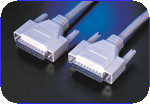
Parallel Data Cable (Printer extension cable, with male-female 25 pin connector, and pin to pin through) |
A-A type USB cable(for power) |
|
|
|
Optional Items:
|
ATMEL 89 Adapter |
ATMEL PLCC 44 Adapter |
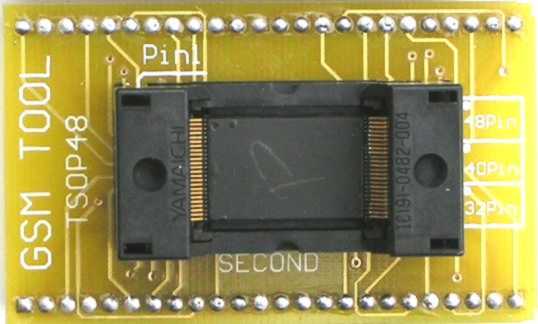
TSOP 48 Adapter |
|
|
|
|
|
FWH/HUB PLCC32Adapter |
PLCC32 Adapter |
SOIC Adapter(Simplified) |
|
On-Board |
On-Board |
|
|
AC or DC Power Adapter (9V or 12V, 200mA) |
SOIC Adapter(Professional) |
|
|
|
|
|
Automatically retrieves the chassis number to identify the exact model, year, and engine code without manual entry.
Antivirus and Windows Defender must typically be disabled during installation to allow for file extraction and activation via keygen.
Fully functional in this version, allowing technicians to track previous diagnostic sessions and vehicle data. 3. Performance Improvements in 2017R3 Final Autocom Delphi 2017R3 Final
Allows real-time recording of vehicle parameters while driving, enabling technicians to capture intermittent faults.
Optimized for faster diagnostic communication and more efficient hardware-software integration. 4. System Requirements & Installation Notes Automatically retrieves the chassis number to identify the
Complete resolution of previous ISS bugs, ensuring full scans now work across all supported car and truck models.
The unit automatically checks and adjusts to the vehicle's battery voltage (12V or 24V), protecting both the unit and the vehicle during testing. Autocom Delphi 2017R3 Final
While is a stable and "solid choice" for older vehicles and workshops using legacy hardware, it lacks support for newer diagnostic protocols found in subsequent releases like Autocom 2020 or 2023. It remains popular for its reliability in independent garages focused on vehicles manufactured before 2017/2018.
Hardware Installation & Configuration
|
Installation Steps
(Note: the LPT port of PC MUST set to ECP or ECP+EPP during BIOS setup. To enter the BIOS setting mode, you need press "Del" key or "F1" key during the computer selftest, which is the moment of computer just power up.)
Software Version To Use | |||
| |||
|
| |||
|
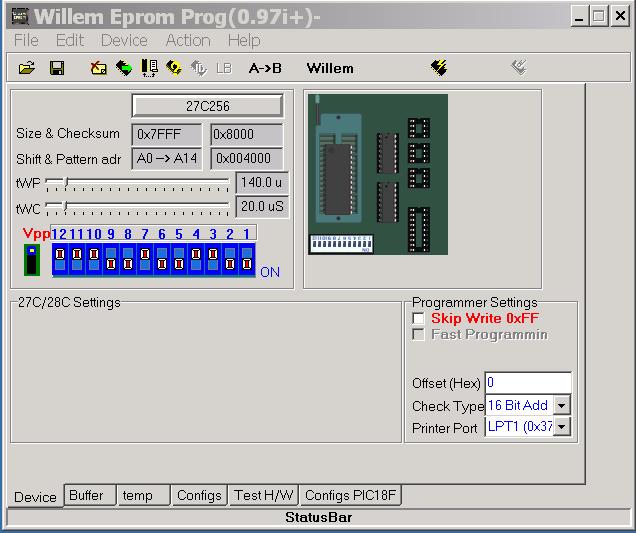
The software interface:
| |||
|
| |||
|
Hardware
Check
| |||
|
PCB3.5/PCB4E
PCB5.0
PCB5.5C
Note: the Vcc setting jumper only has effect when you are using AC adaptor as power source. For the USB power only 5V Vcc is available. For the PCB5.5C, set DIP steps: 1. press DIP Set button twice to check current DIP bit position. Then set it again for ON or OFF. 2. press DIP Bit shift button to shift the DIP bit position to where need to set. And then press DIP Set button twice to check current DIP bit position. Then set it again for ON or OFF. 3. Repeat those steps till all DIP bit ae set same as software indicated. For PCB5.5C voltage and Special chip selection: 1. Put back the safety jumper. 2. Press the voltage button and hold for 1 second, the voltage LED should move to next. Repeat till desired voltage LED light up. 3. Press the chip selection button and hold for 1 second, the chip LED should move to next. Repeat till desired LED light up. 4. Remove the safety jumper to lock the selected voltage and chip selection
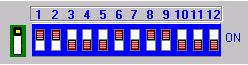
DIP Switch (PCB3.5, PCB5.0)
When programming one chip, follow the program prompt to set DIP switch .
|
Automatically retrieves the chassis number to identify the exact model, year, and engine code without manual entry.
Antivirus and Windows Defender must typically be disabled during installation to allow for file extraction and activation via keygen.
Fully functional in this version, allowing technicians to track previous diagnostic sessions and vehicle data. 3. Performance Improvements in 2017R3 Final
Allows real-time recording of vehicle parameters while driving, enabling technicians to capture intermittent faults.
Optimized for faster diagnostic communication and more efficient hardware-software integration. 4. System Requirements & Installation Notes
Complete resolution of previous ISS bugs, ensuring full scans now work across all supported car and truck models.
The unit automatically checks and adjusts to the vehicle's battery voltage (12V or 24V), protecting both the unit and the vehicle during testing.
While is a stable and "solid choice" for older vehicles and workshops using legacy hardware, it lacks support for newer diagnostic protocols found in subsequent releases like Autocom 2020 or 2023. It remains popular for its reliability in independent garages focused on vehicles manufactured before 2017/2018.