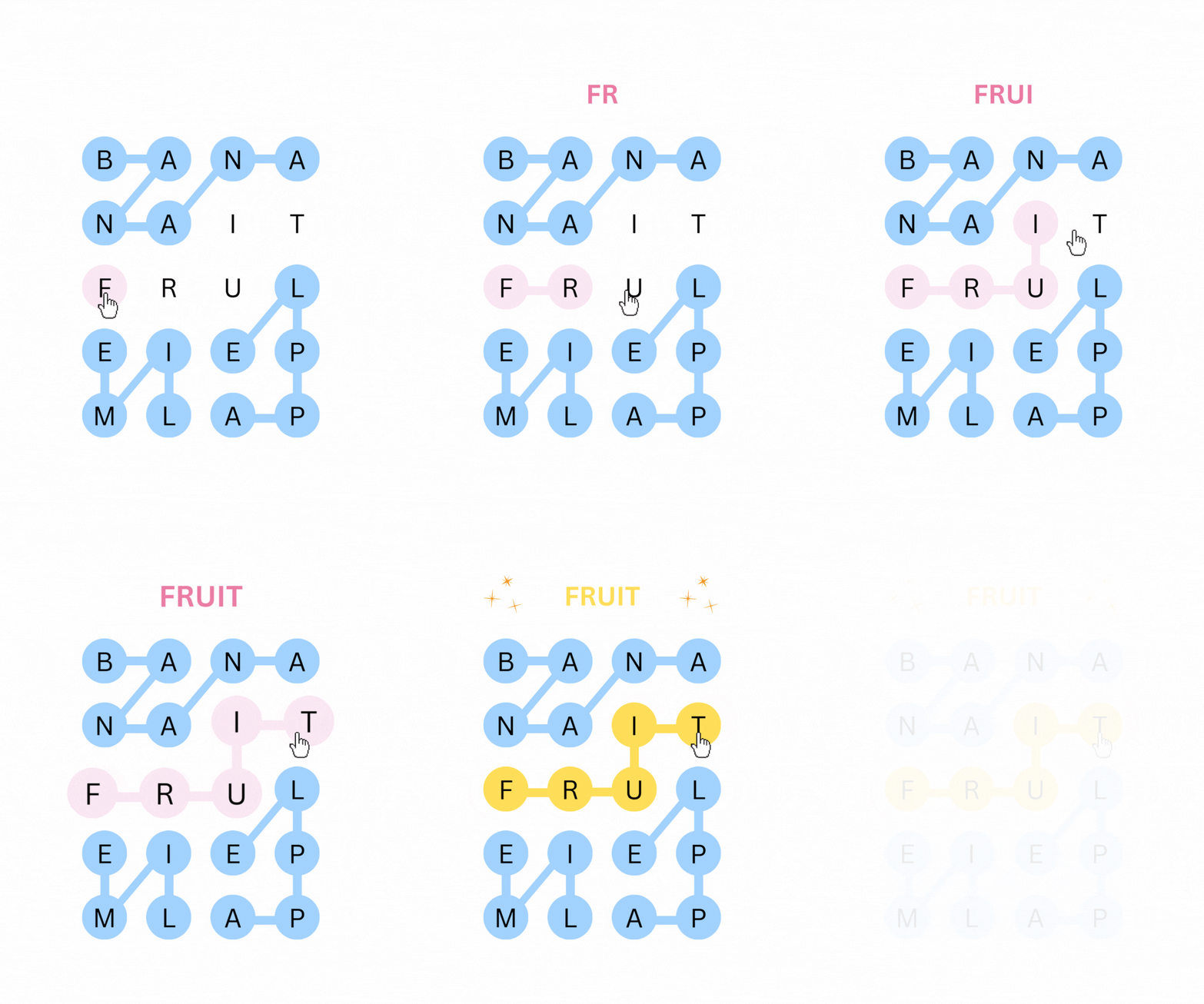
Find theme words to fill the board
Theme words stay highlighted in blue when found.
Drag or tap letters to create words. tapping, double tab the last letter to submit.
Theme words fill the board entirely. No theme words overlap.
Using a Limited Liability Company (LLC) to purchase real estate is a popular strategy for investors ranging from beginners to seasoned professionals. By blending the flexibility of a partnership with the legal protection of a corporation, an LLC serves as a powerful vehicle for managing property. Asset Protection and Limited Liability
LLCs are favored for their "pass-through" taxation. Unlike a C-Corporation, which faces double taxation on both corporate profits and shareholder dividends, an LLC’s income flows directly to the members. These profits are reported on personal tax returns, avoiding the corporate-level tax. llc to buy real estate
The primary driver behind forming an LLC for real estate is . Real estate carries inherent liabilities, such as tenant injuries, structural failures, or environmental issues. If a property is held in an individual’s name, their personal assets—including their home, savings, and vehicles—could be seized to satisfy a judgment. Using a Limited Liability Company (LLC) to purchase
Purchasing real estate through an LLC provides a layer of . Since the public record will list the LLC as the owner rather than an individual, it is more difficult for the general public to link a specific person to a high-value asset. This privacy is often essential for high-profile investors. Additionally, operating under a business name often lends a level of credibility and professionalism when dealing with tenants, contractors, and lenders. Potential Drawbacks Despite the benefits, there are hurdles to consider: Unlike a C-Corporation, which faces double taxation on
Conventional residential lenders often prefer lending to individuals. Getting a mortgage for an LLC may require a "commercial" loan, which typically carries higher interest rates and requires larger down payments.