Reactie

Free automated testing tool for web scraping, selenium automation, and data parsing — with 650+ configs

Introduction

OpenBullet Anomaly is a powerful automated testing tool and web scraping suite that allows you to perform requests towards a target webapp and offers a lot of tools to work with the results. This software can be used for scraping and parsing data, automated pentesting, unit testing through selenium automation and much more. Download OpenBullet and SilverBullet configs for free from our store.
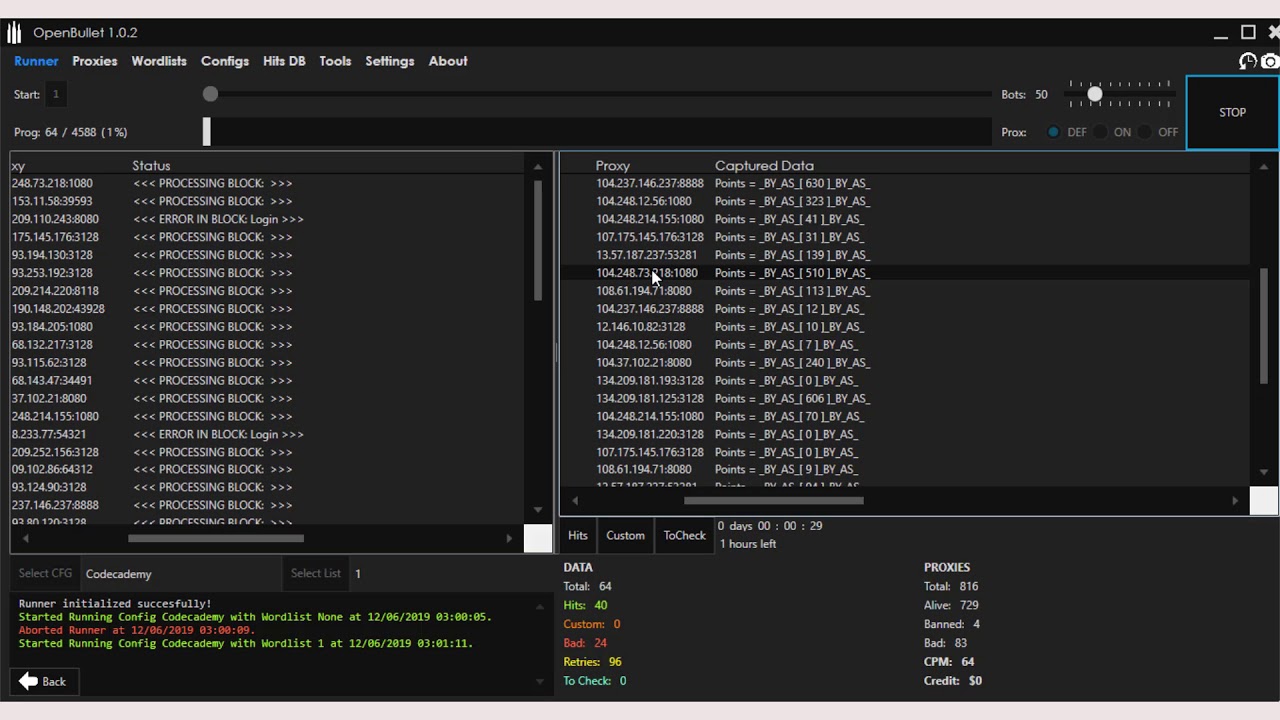
OpenBullet Interface

Why OpenBullet?

Powerful features designed for professionals

Fast & Efficient

High-performance testing with optimized threading and proxy support for maximum speed.

650+ Configs

Access to a vast library of pre-made configs for popular websites and services.

Secure & Private

No ads, no tracking. Your testing activities remain completely private.

Download

Latest Version

Download the latest updated version with 650+ configs included.

Password: openbullet.store reactie

Download .RAR File

Cracking Course

Complete cracking course with tools, audio explanation, video and text tutorials. In Dutch, translates most commonly to reaction ,

Advanced Course

Advanced course for OpenBullet Anomaly & OpenBullet 2 [2026] with comprehensive materials. translates most commonly to reaction

Reactie

In Dutch, translates most commonly to reaction , response , or comment . It is a versatile term used in social, professional, and scientific contexts. Common Uses of "Reactie"

Refers to a formal response or position paper regarding a proposal or consultation. Example: "ACM reactie" (ACM response). Science: Refers to a chemical reaction .

Example: "ReactIE" is a framework for extracting structured chemical reaction information from text. Contextual Variations

Refers to a comment or feedback left on a post. Example: "Eén reactie" (One comment).

: I look forward to your response.

If you are writing a "reactie" (response), you might use these common Dutch phrases: : Thank you for your message.

In Dutch, translates most commonly to reaction , response , or comment . It is a versatile term used in social, professional, and scientific contexts. Common Uses of "Reactie"

Refers to a formal response or position paper regarding a proposal or consultation. Example: "ACM reactie" (ACM response). Science: Refers to a chemical reaction .

Example: "ReactIE" is a framework for extracting structured chemical reaction information from text. Contextual Variations

Refers to a comment or feedback left on a post. Example: "Eén reactie" (One comment).

: I look forward to your response.

If you are writing a "reactie" (response), you might use these common Dutch phrases: : Thank you for your message.