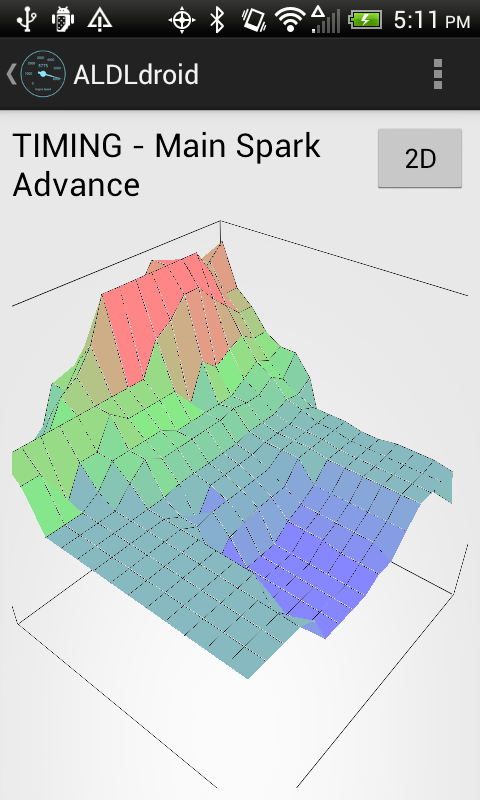
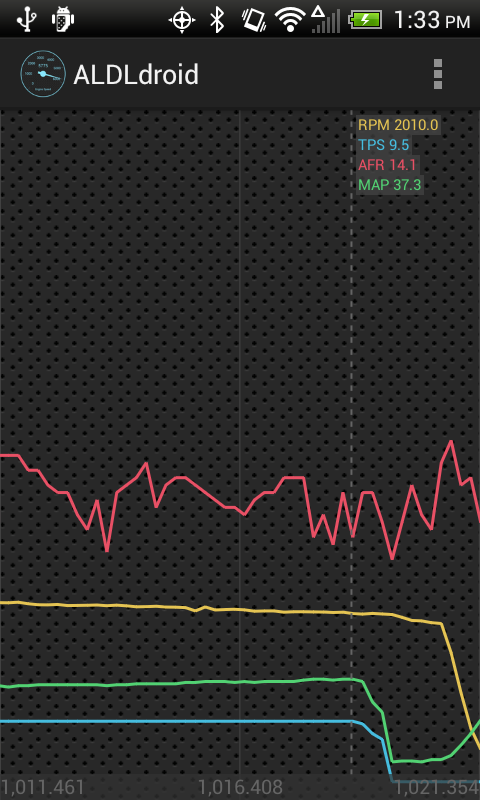
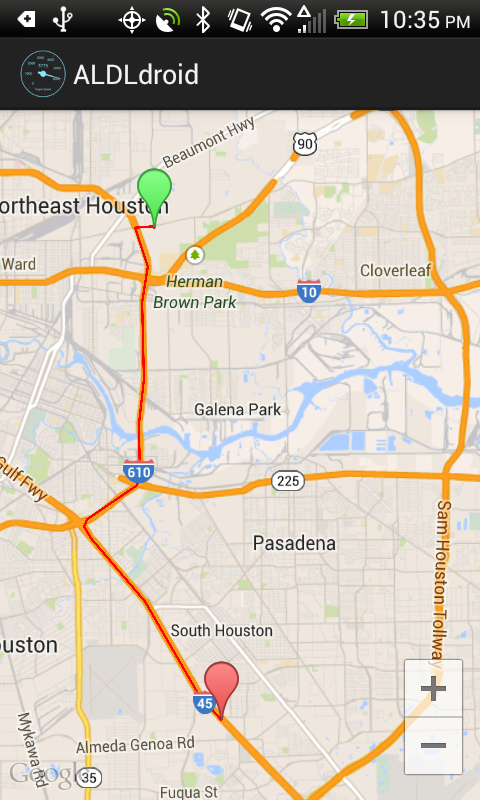
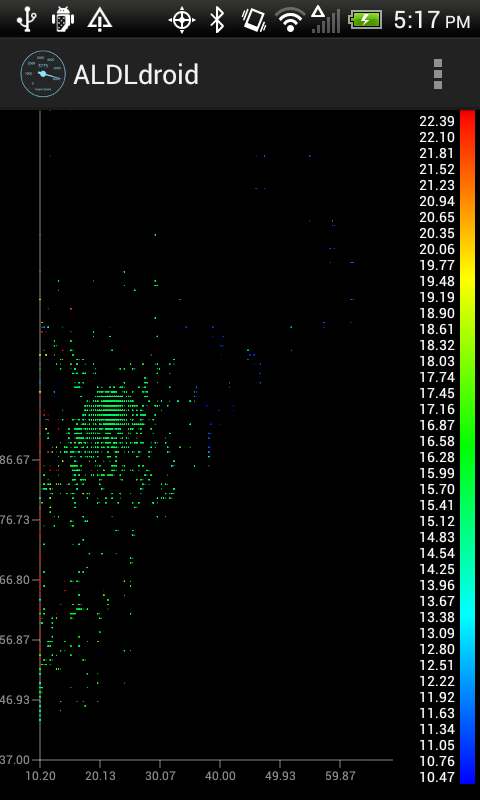
While the application was first developed for GM OBD-I ECUs, it uses a very flexible way of parsing ECU data stream that has proven useful to a lot of other car enthusiasts such as owners of BMW, Ford, DSM (Mitsubishi), Porsche, etc. The application also includes a complete tuning interface as well as data log file viewers which are in the form of time series, maps and scatter plots.
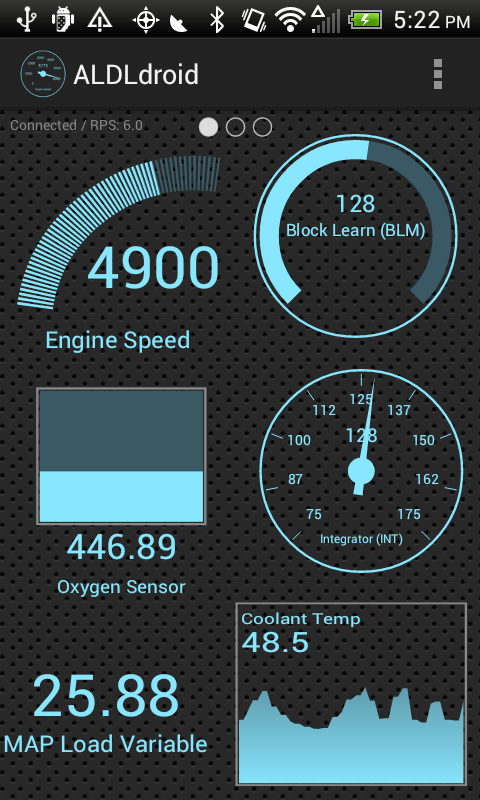
Learn More Download NowThe application has three big components: dashboards where data coming from the ECU can be displayed in various formats, a tuning section and data log file viewers.
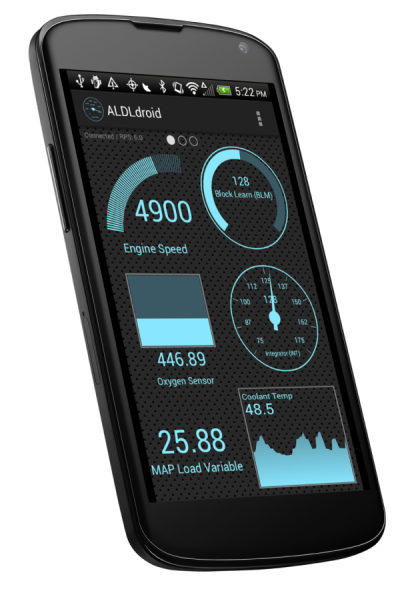
Customize the dashboards with any indicators you want to see
Android sensors on your device are used to display useful GPS geolocation data (including speed) as well as triple axis accelerometer data (including g-force)
Display the app in your windshield to see it at a glance
Look at the data you just data logged on your phone or tablet using the build-in time series, maps or scatter plot log viewers
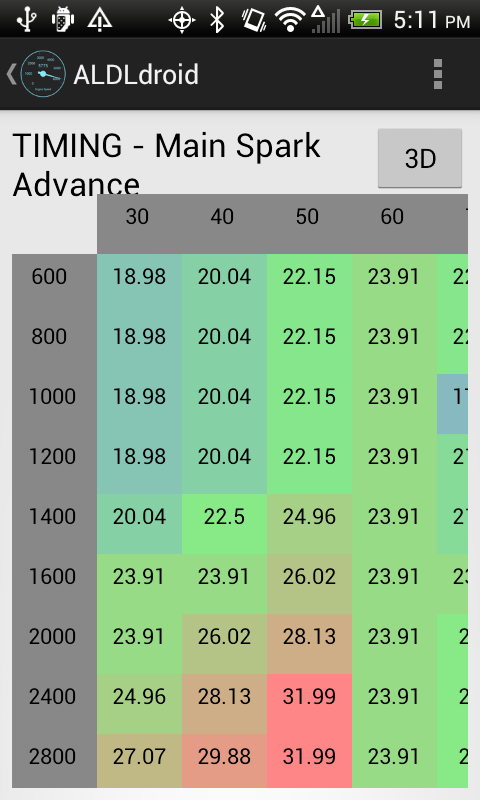
Tune on the fly using supported real-time tuning hardware or edit a binary file to program a chip later
We try to answer email from our customers as fast as we can, more often than not, we will answer within 24 hours
The application uses ADX and XDF files which are files from TunerPro (Windows software). These files can be found on various sites such as TunerPro Web site itself, GearHead EFI forums as well as your cars enthusiasts forums related to your specific vehicle.
Here is the easy steps that you can follow that will get you going
Find the ADX file for your vehicle. This is often the hardest part. Once your've found it, the rest is easy!
Install the ALDLdroid application from Google Play
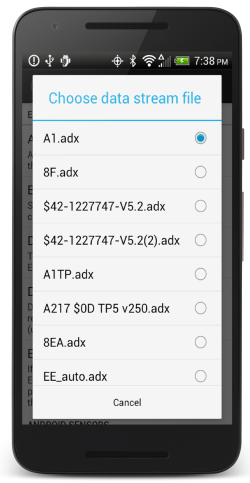
Use the Import Data stream feature of the application to import your ADX file.
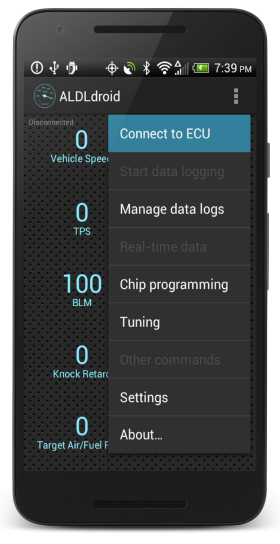
Connect the ALDL cable to your vehicle diagnostic port. Hit the Connect to ECU menu in the application and watch the data come in!
The application supports various hardware that can be wired or connected wirelessly to your Android device. Here is what is currently supported:
Wired connection (USB) and wireless (Bluetooth) are both supported by the app. For Bluetooth, we suggest the Red Devil River adapters (or the 1320 electronics if you can find one used) and for USB, any FTDI (USB chip) based cable will do. :obd2allinone should have what you need.
It is possible to program chip for your ECU using the Moates BURN1 (discontinued), BURN2 as well as AutoProm.
For real-time tuning, the application currently support the Moates hardware as well. That is the Ostrich as well as the AutoProm.
If you ECU is equipped with an NVRAM module for real-time tuning, that is also supported for some ECU. Mainly Australian ECUs at this point and more can be added as required.
Some of the features described above can be seen on the screenshots below.
We love to see what our customers do with our application so here a video of Boosted & Built Garage and his pretty awesome setup.
At its most fundamental level, "ware" represents the tangible. We see this in "hardware" and "housewares"—the iron pots, wooden chairs, and steel hammers that constitute our physical environment. For centuries, "ware" was synonymous with the craftsman's output. A potter produced "earthenware" or "stoneware," terms that emphasized the raw material’s transformation into a functional object. In this context, "ware" is about durability and the physical weight of civilization.
The word "ware" is a small syllable with a massive footprint. Derived from the Old English waru , meaning "merchandise" or "goods," it serves as the linguistic DNA for how we describe the objects that fill our lives. Whether we are discussing the physical tools of the past or the invisible code of the future, "ware" defines the intersection of human utility and material existence. At its most fundamental level, "ware" represents the
In conclusion, "ware" is a bridge between the ancient and the modern. It began in the heat of the kiln and the clang of the blacksmith’s anvil, and it now resides in the silent pulses of a fiber-optic cable. It is a suffix of human ingenuity, reminding us that whether a product is made of clay or code, it is ultimately a reflection of our needs, our desires, and our evolution. A potter produced "earthenware" or "stoneware," terms that
However, the 20th century sparked a semantic revolution. With the advent of computing, the term was decoupled from physical mass. "Software" emerged as a conceptual twin to hardware, representing the instructions that tell the physical machine what to do. This birthed an entire ecosystem of "wares": firmware for low-level control, shareware for open distribution, and the more sinister malware or ransomware . Here, "ware" shifted from describing a thing you can hold to a product you can experience or utilize, proving the word’s incredible adaptability. Derived from the Old English waru , meaning
Beyond commerce and computing, "ware" also carries a cautionary undertone when it appears in its cousin form: "beware." To be "aware" or "wary" is to be on one's guard regarding the "wares" being presented. This linguistic connection suggests that the things we possess—or the things that possess us—require a level of vigilance. Whether it is a merchant hawking goods in a market or a digital platform harvesting data, the "ware" is never neutral; it is an exchange of value, labor, and sometimes, privacy.
Subscribe to our email newsletter for useful tips and resources.
Copyright 2026 ALDLdroid. All Rights Reserved.